Under the arch
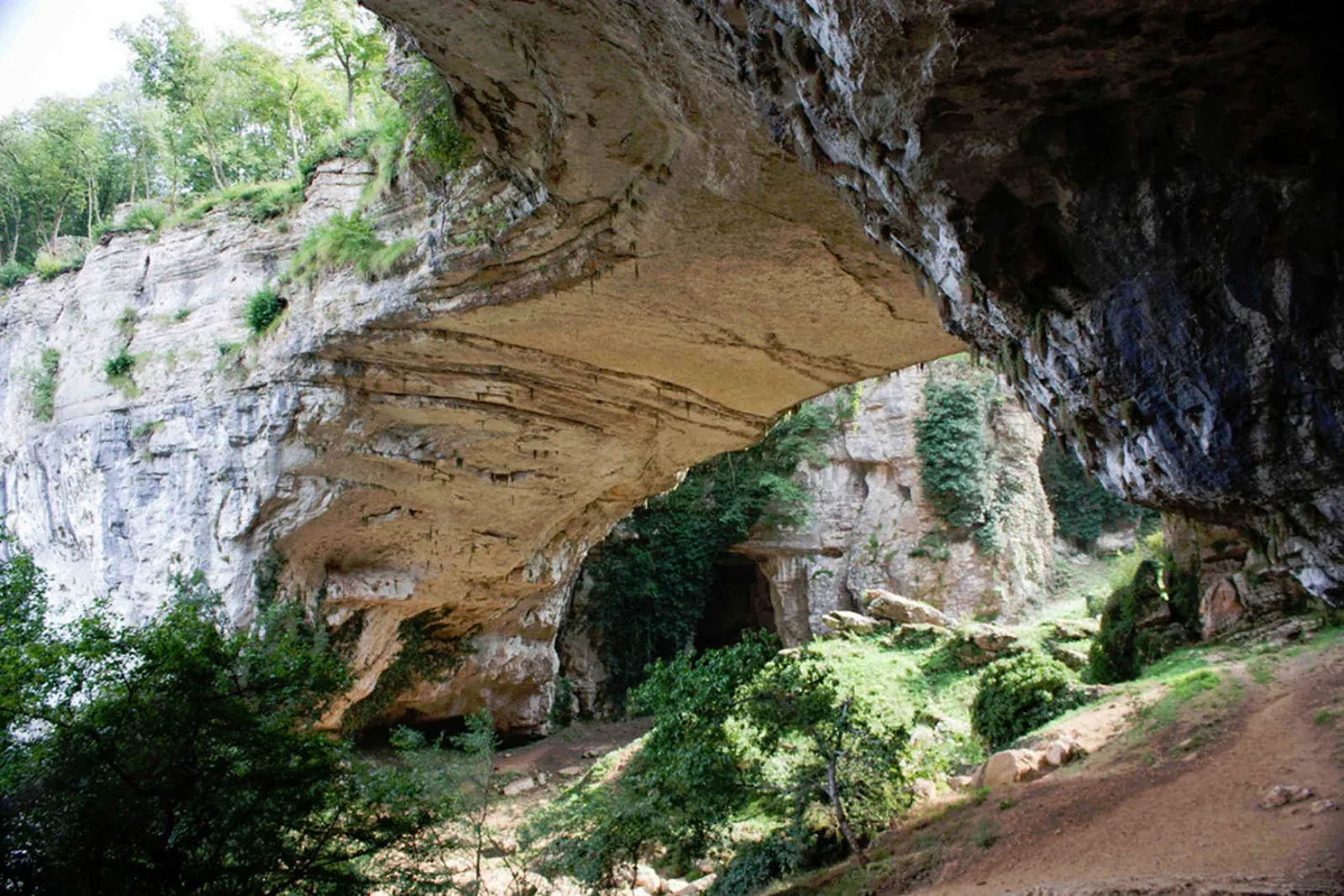
The footpath descends to the base of the bridge, with steps and spots to sit. It's from here that you really grasp the scale of the vault.
Natural monument of the Lessinia
Europe's largest natural bridge: forty million years of geological history, just steps from our trattoria.
Home/The Ponte di Veja
How it formed
About forty million years ago there was a large karst cave here. The streams flowing down from the Crestena and Fenil valleys eroded the limestone until the inner part of the roof gave way. What remained standing is the arch you see today.
The bridge sits at 602 metres above sea level. The arch is fifty metres high, about ten metres thick and seventeen metres wide on average. You can walk underneath it, and you can also walk on top of it.
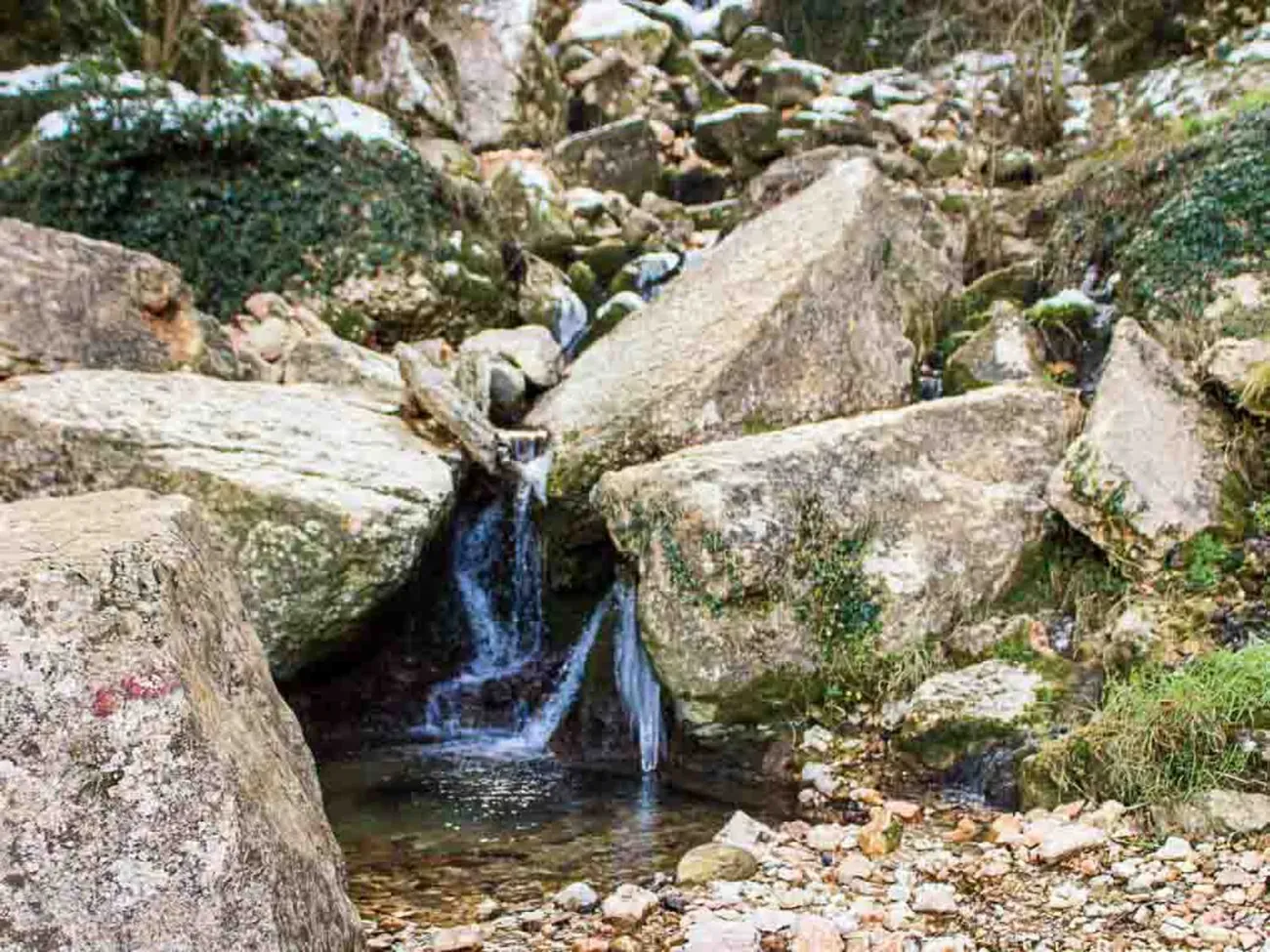
The arch exists because of the erosion of the streams, and those streams never left: they still flow beneath the vault. Walking along the path you come across small waterfalls, pools and streams of fresh, clear water.
That's why the vegetation down here stays green and thick even in August, when everything around is dry.
Beneath the arch
Under the arch open five large caves, used by humans since the First Glaciation. Excavations have turned up arrowheads, needles, tools and the bones of prehistoric animals.
The Park's panels along the trail tell you who passed through here: Homo erectus artefacts, traces of Neanderthals in the entrance area, blades and bone tools of Homo sapiens, and then the Neolithic through to the Bronze Age.
It's one of the most important prehistoric sites in the Veneto region, and it can be visited freely.
How to visit
You drive to the trattoria's yard, then continue on foot. Steps and benches lead all the way under the arch.
The footpath descends to the base of the bridge, with steps and spots to sit. It's from here that you really grasp the scale of the vault.
You can also walk on top of the arch, from where the view opens onto the surrounding valleys.
A few hundred metres away as the crow flies is the most representative system of cliffs in the Lessinia: sheer limestone walls that draw climbers from all over Europe every year. Rope descents from the arch are also practised.
Art, literature, music
The Ponte di Veja isn't just geology. For centuries it has found its way into paintings, legends and, more recently, music videos.
Painting
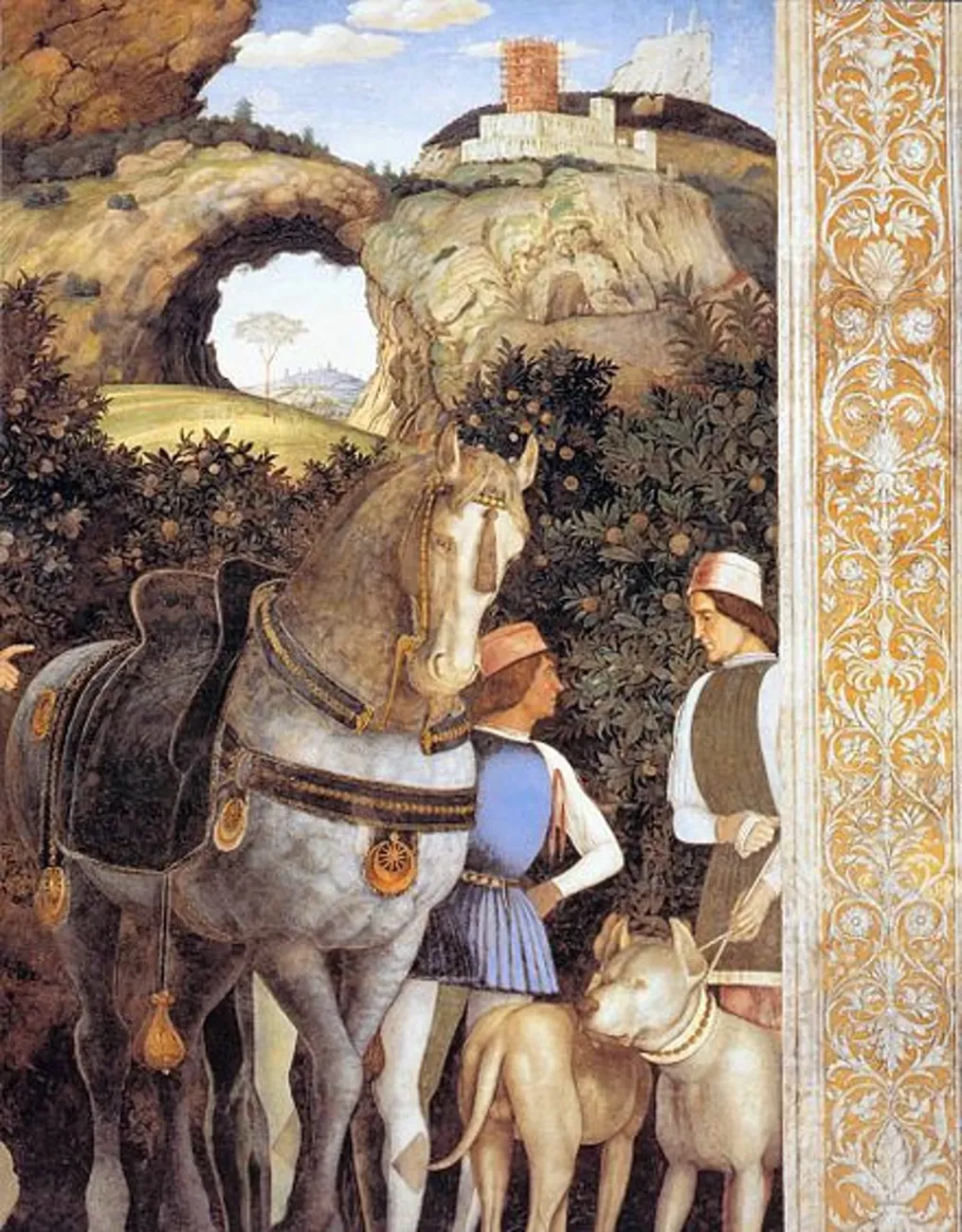
Andrea Mantegna depicted the bridge in one of his works. It's the oldest evidence that this rock arch struck visitors many centuries ago already, back when getting here was anything but easy.
Legend
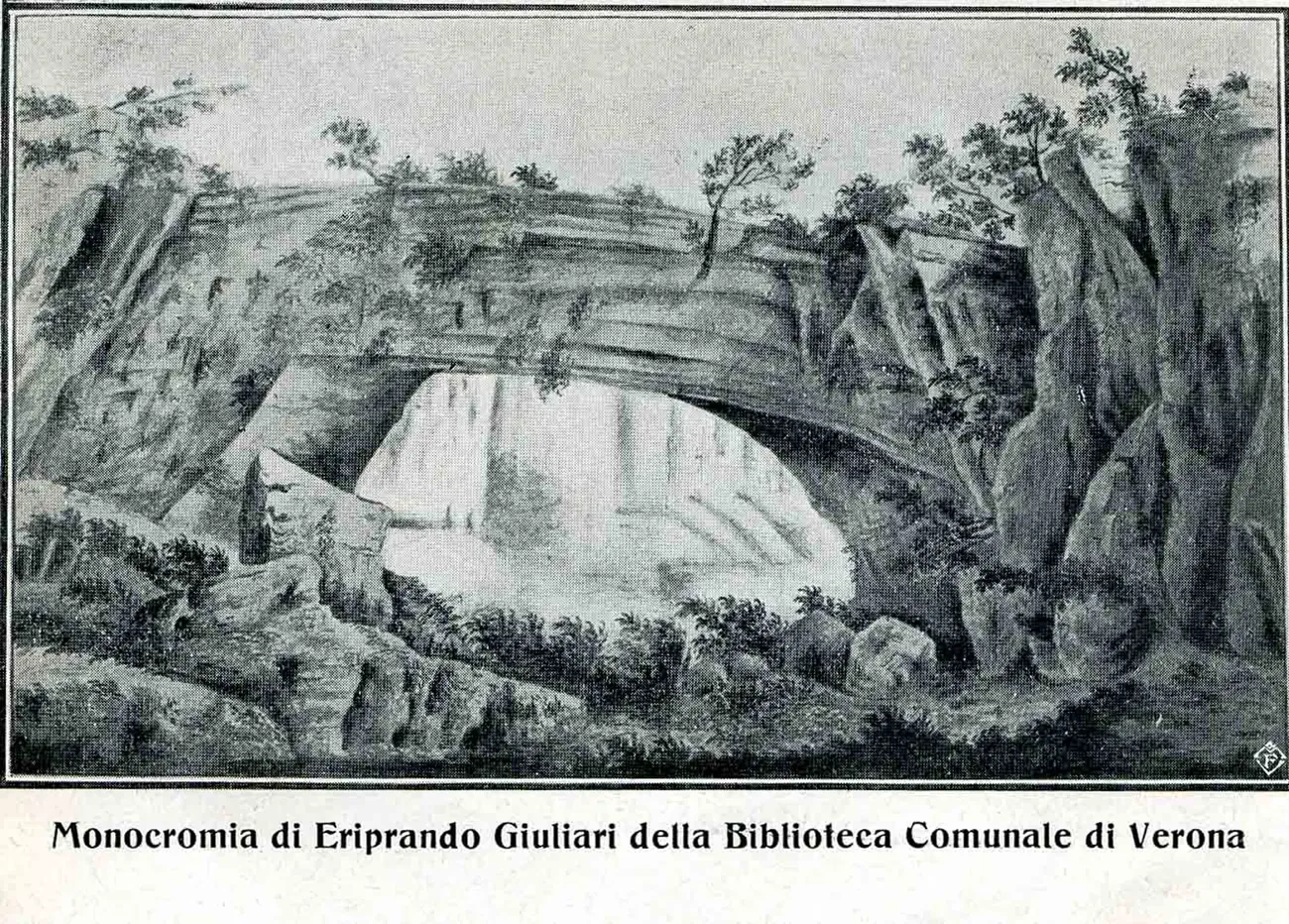
Legend has it that Dante Alighieri, exiled in Verona, climbed up here and drew inspiration from this landscape for the Malebolge of the eighteenth canto of the Inferno. The tree under which he is said to have written is still called the Castagno di Dante (Dante's Chestnut Tree).
This is a local tradition, not a documented fact. But it's the story that has always been told here.
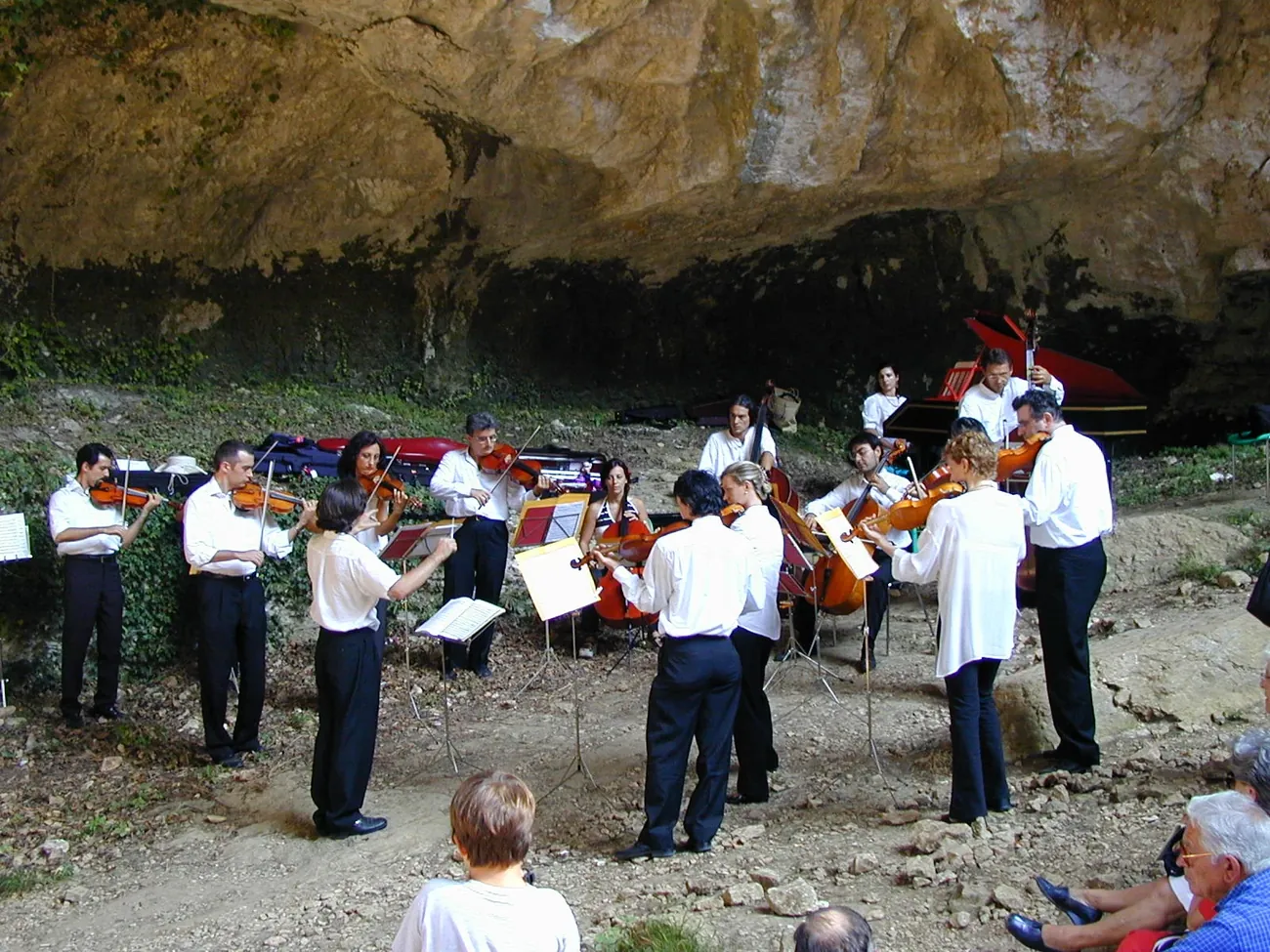
Music
For years the international music festival Voci e Luci in Lessinia was held under the arch. The vault's natural acoustics and the lights on the rock did the rest.
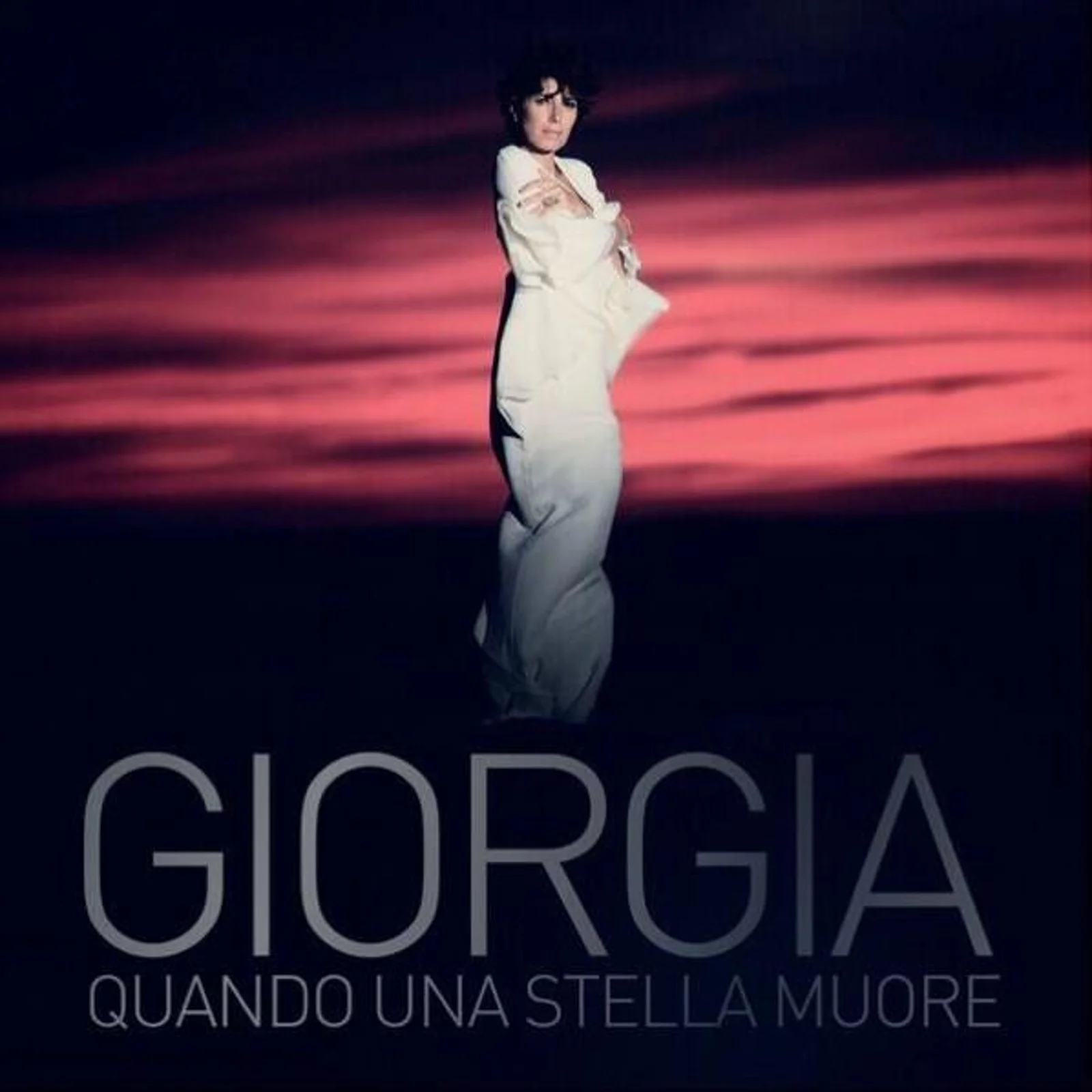
Music
The music video for Quando una stella muore was filmed here, between the rock arch and the Lessinia woodland.
Watch on YouTube
Music
Emma also chose the Ponte di Veja: the video for Cullami, from the album A me piace così, was shot right here under the arch.
Watch on YouTube
Music
The video for Fuori di me, filmed at the Ponte di Veja, brought this corner of the Lessinia to Italian screens.
Watch on YouTube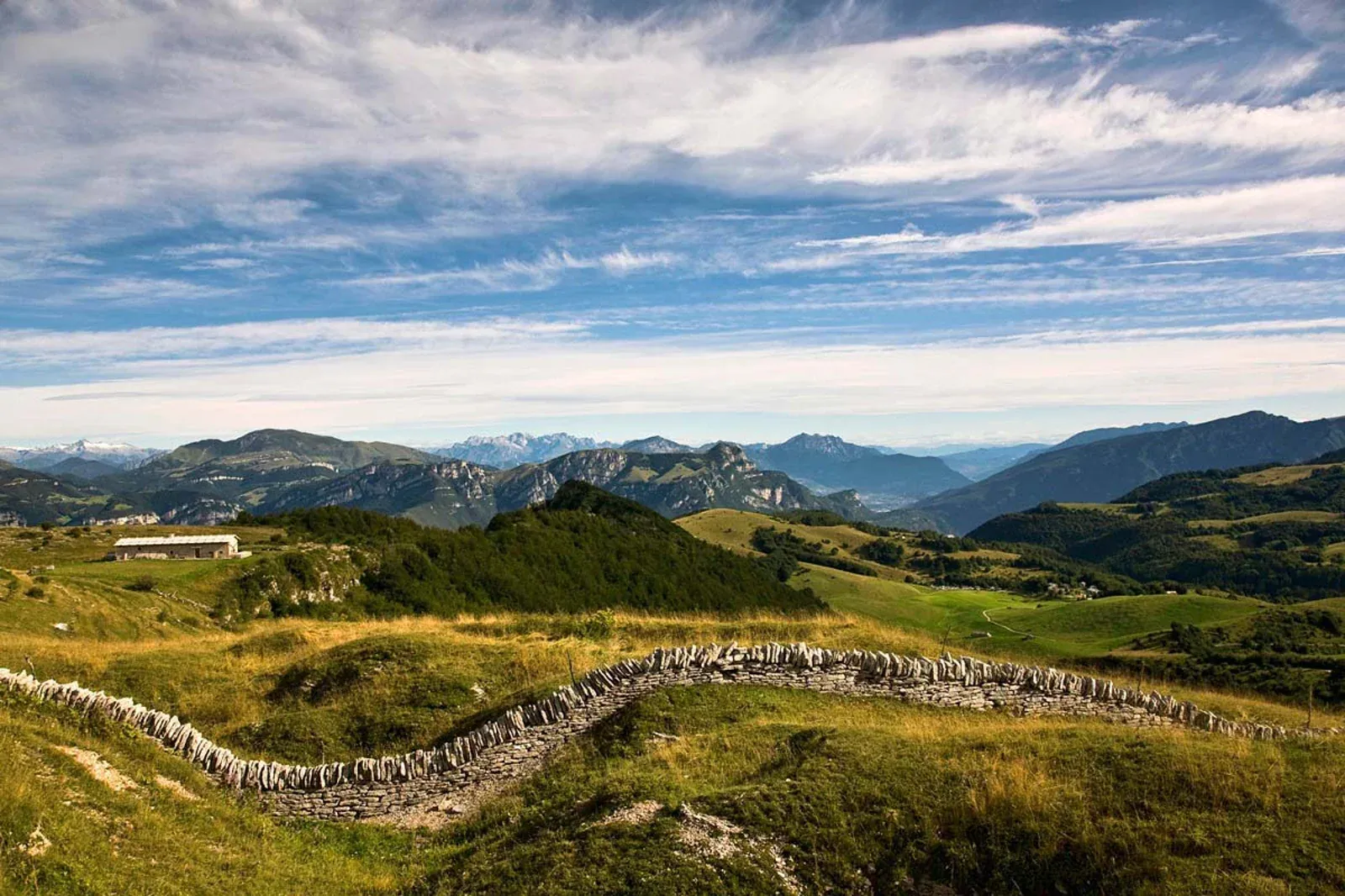
Around the bridge
A few steps from the yard there are seven-hundred-year-old chestnut trees, a trail that comes all the way from Brittany, a crucifix carved into the rock, and the Veja Adventure Park with its treetop obstacle courses. A little further on, the rest of the Lessinia: caves, waterfalls, fossil museums and stone mountain huts.
Gallery
A Christmas event
Over the Christmas period the trattoria's terrace also hosts the Presepe Montano (mountain nativity scene), which changes shape and size with every edition. The materials used for the display are typical of the local area: moss, chestnut, ash and hornbeam wood, and stone from Prun.
Since its first edition at Christmas 2007, every display has been created by Luigi Fasoli, who rebuilt it from scratch each year: sixty to seventy hours of work over three weeks.
Born as a Christmas tradition, over the years the nativity scene has also become an occasion for charity: last year's collection went to the children and families of Gaza.
It has been written about beyond the Lessinia too: L'Arena and Telenuovo both covered it, the latter with a dedicated TV segment.
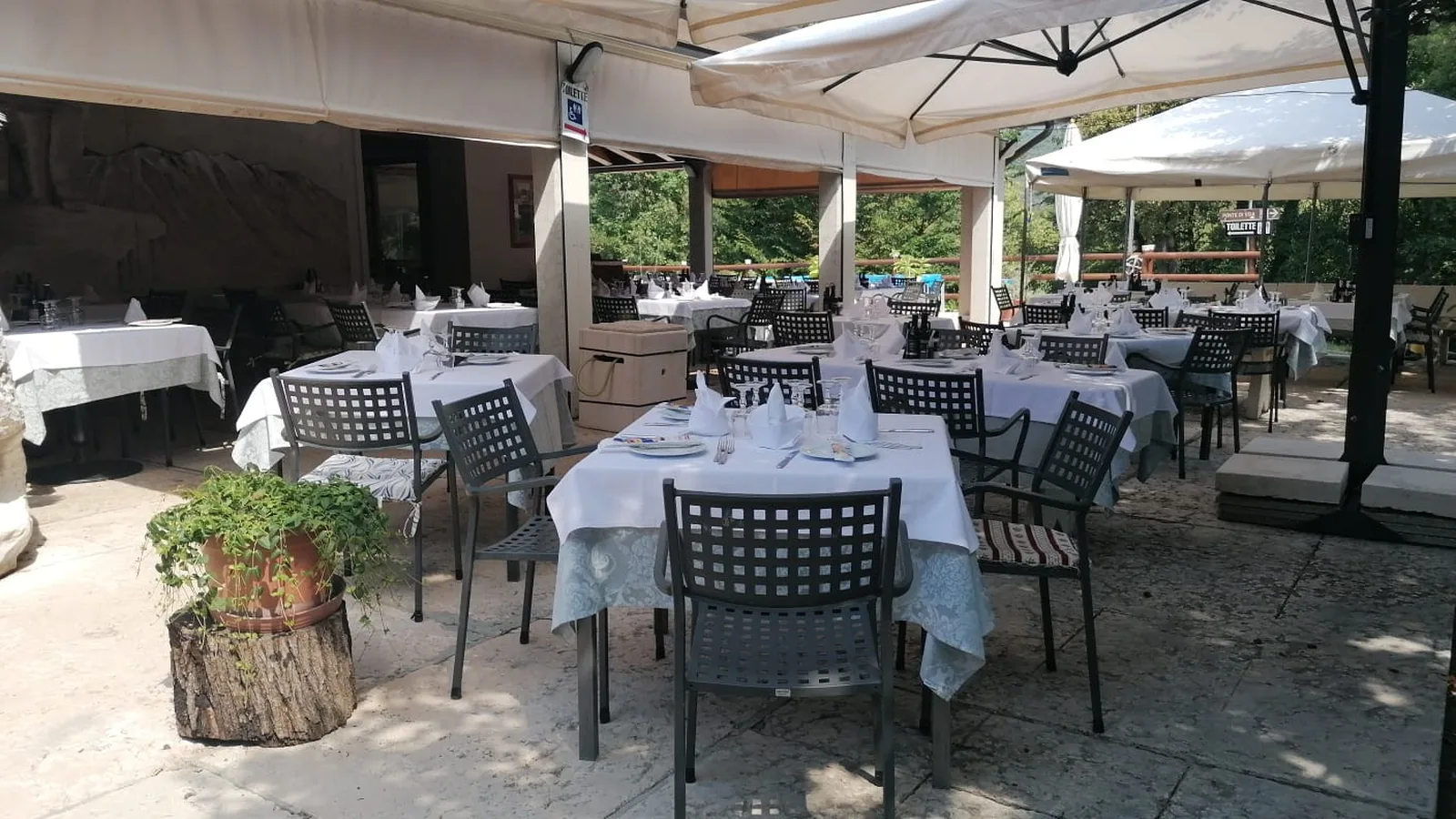
We're just steps from the arch, with parking, toilets and a kitchen that's always open. The natural place to stop after your visit.
Book your table